Cohorts vs. Groups vs. Learning Paths: Which One Do I Want?
Cohorts, groups, and learning paths all involve organizing learners around courses, and it's easy to reach for the wrong one. Here's the quick way to decide.
Cohort: a timed, single-course delivery
Use a cohort when you're running one specific course on a schedule for a defined roster — a live onboarding class starting Monday, a quarterly compliance refresher, a bootcamp cohort. A cohort pairs one course with a start/end date window, a facilitator, and a member list; adding someone auto-enrolls them in that course.
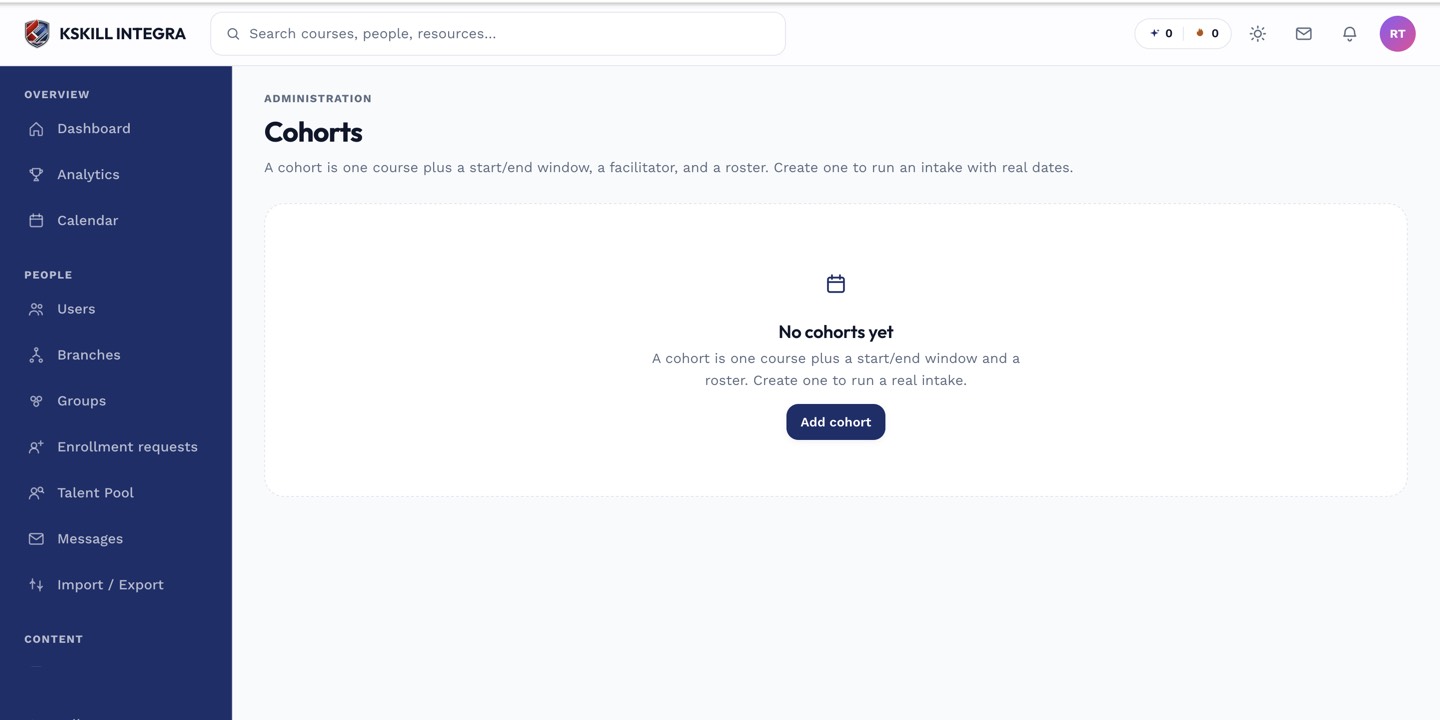 Each row is one course tied to one schedule and one roster.
Group: an ongoing, multi-purpose collection
Use a group when you want a standing collection of users tied to multiple courses, learning paths, and shared files — a department, a team, a community of practice. Groups aren't scheduled the way cohorts are, and learners can often join them themselves.
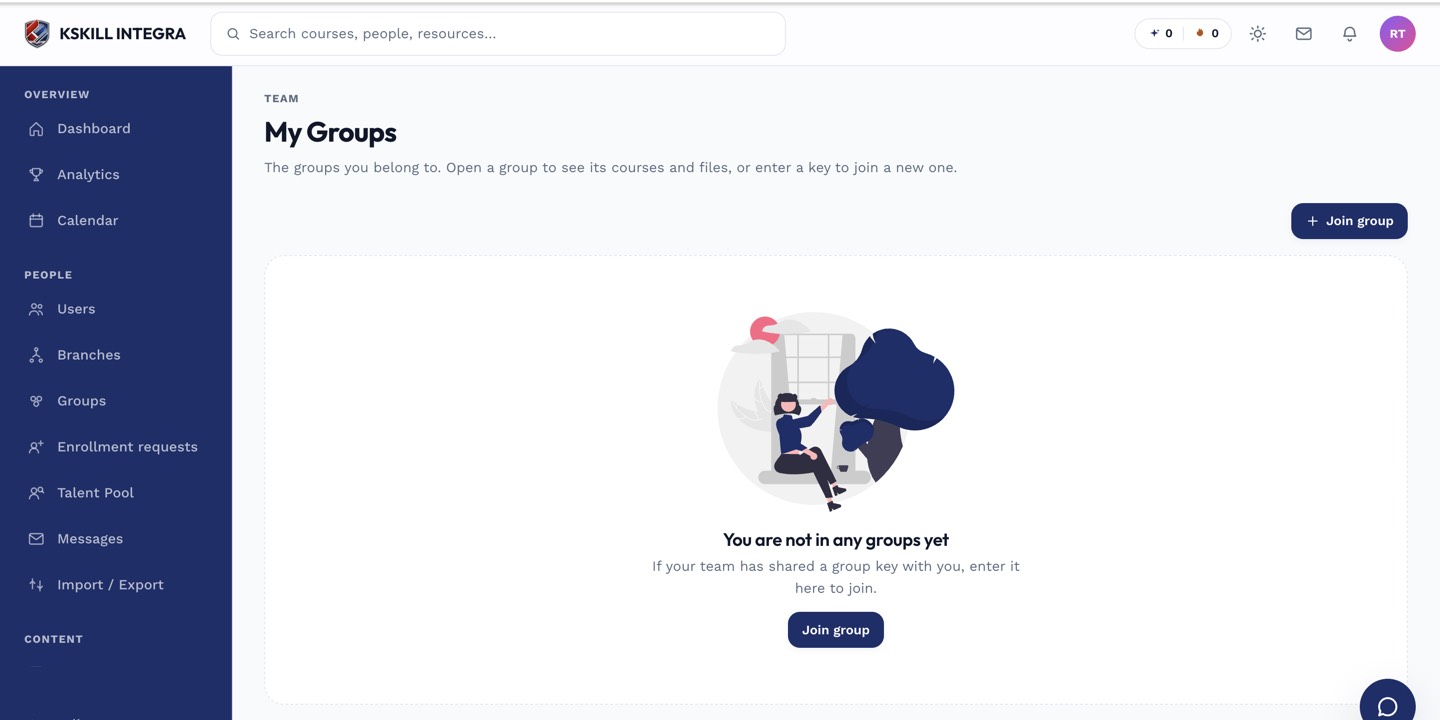 Groups can be admin-assigned or, if enabled, self-joined by learners.
Learning path: an ordered journey through several courses
Use a learning path when the goal is a sequence — course A, then B, then C — rather than a single course or a standing team space. Paths aren't scheduled and don't auto-enroll a roster; they define an order learners work through.
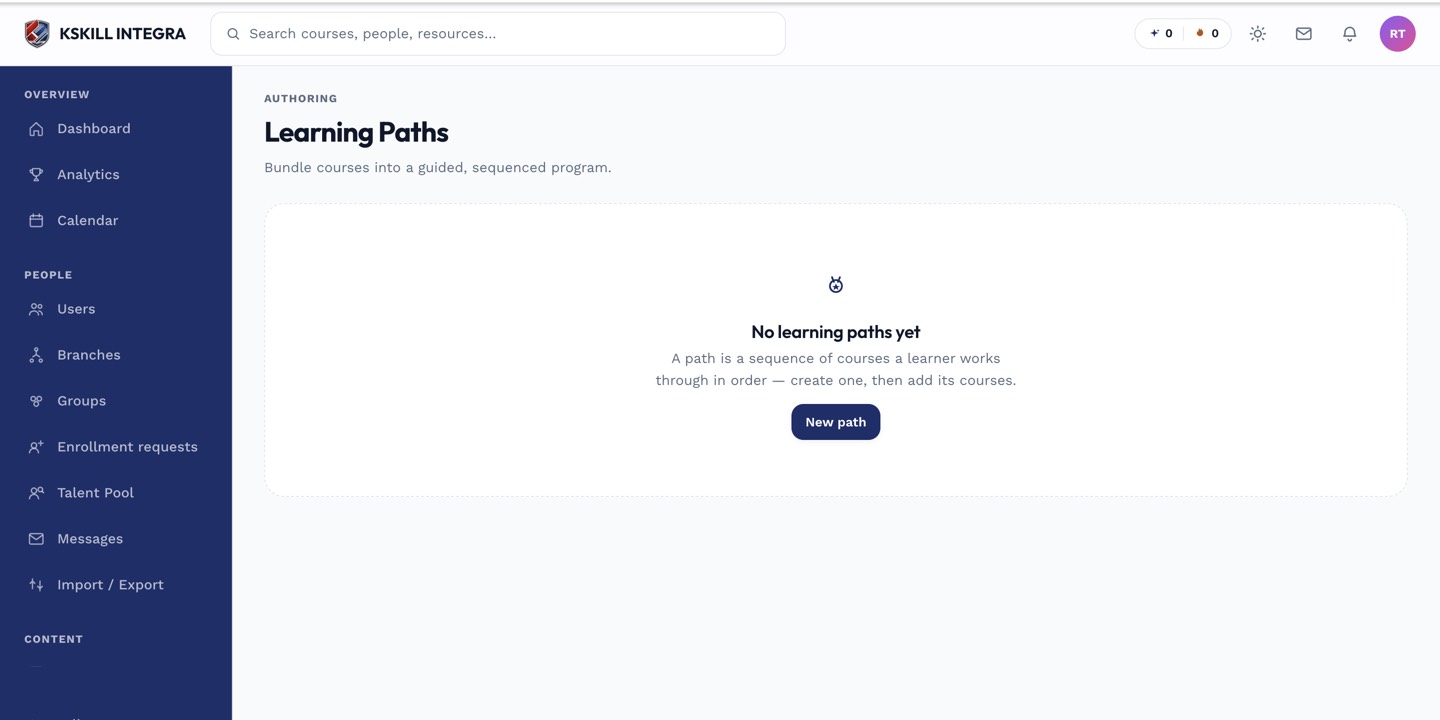 A path is a curriculum, not a roster or a schedule.
Quick decision guide
- Need a start/end date and auto-enrollment for one course? → Cohort.
- Need a standing team space spanning multiple courses and files? → Group.
- Need learners to move through several courses in a fixed order? → Learning path.