How the marketplace redirect model works
The marketplace uses a redirect model — buyers pay the platform, then get signed into the seller's tenant to consume the course. This article explains why.
Before you start
Any admin can read this article. Understanding the model matters if you sell or buy on the marketplace.
Step 1 — Buyer flow
The buyer clicks Buy on a listing, pays the platform, and receives a magic link into the seller's tenant. The seller's tenant provisions the buyer's users on first sign-in and enrols them in the course. Progress lives on the seller's side.
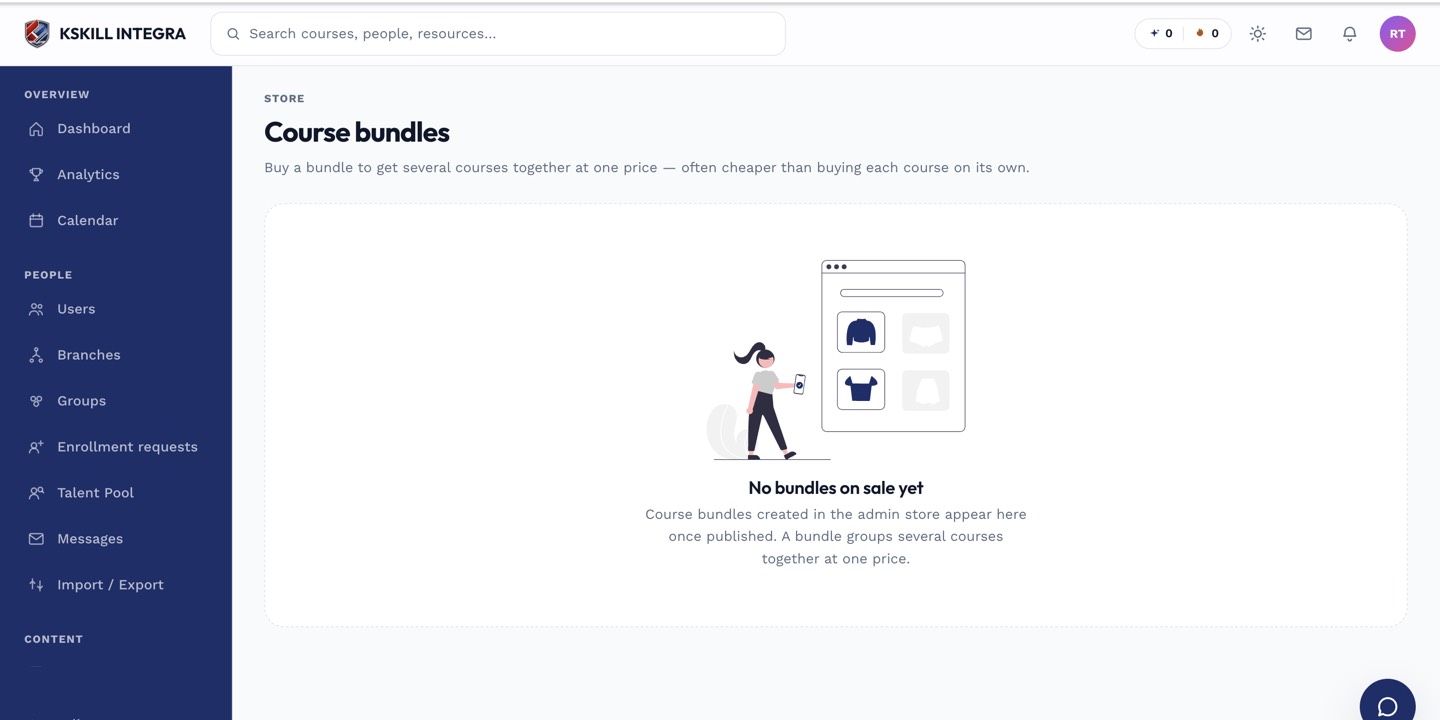
The store is the learner-facing checkout for whatever the tenant sells directly.
Step 2 — Seller flow
The seller receives an order notification and a payout. The learner's progress and certificate live on the seller's tenant, giving the seller a durable relationship with the buyer's learners.
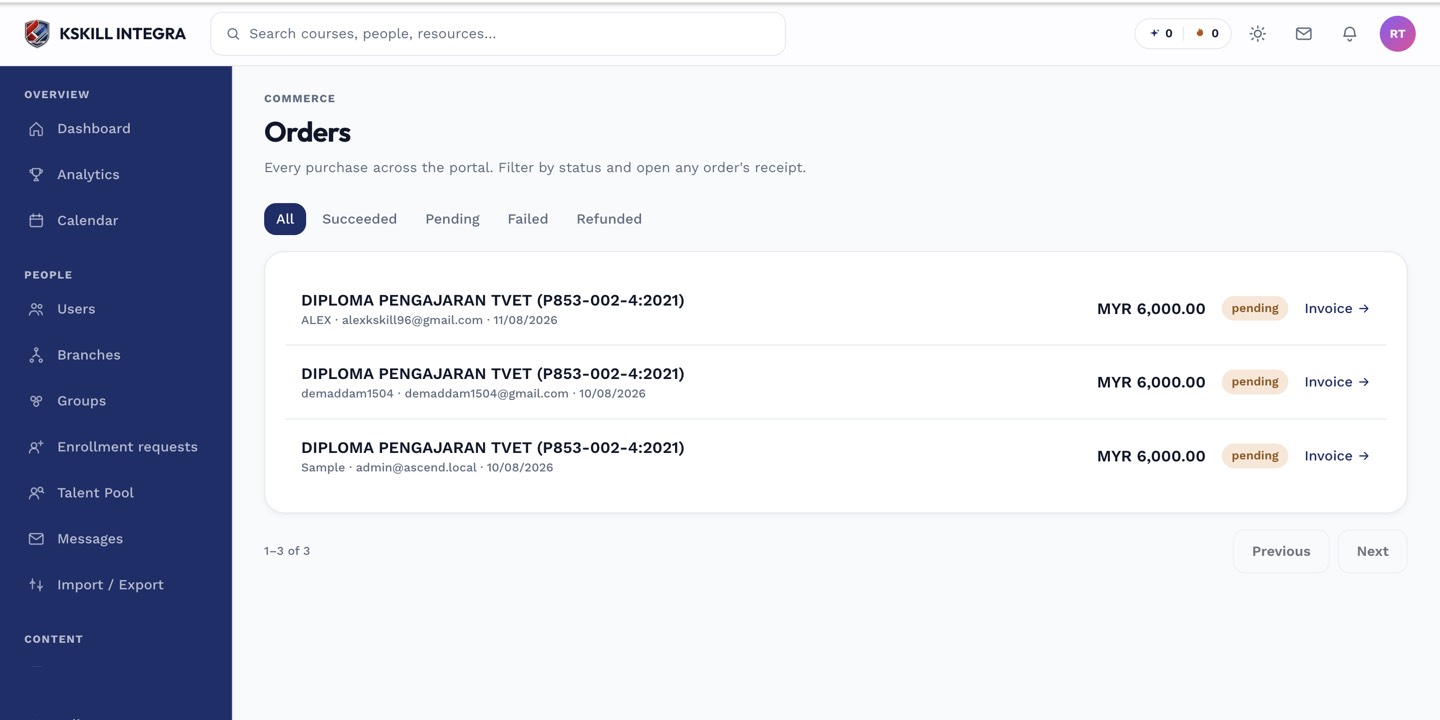
The Orders page is the ledger of every purchase made on the tenant.
Step 3 — Why not fork?
Older versions of the platform forked the whole course into the buyer's tenant. That model produced update drift and duplicated storage. The redirect model keeps sellers in control of quality, keeps buyers up to date, and simplifies refunds and reporting.
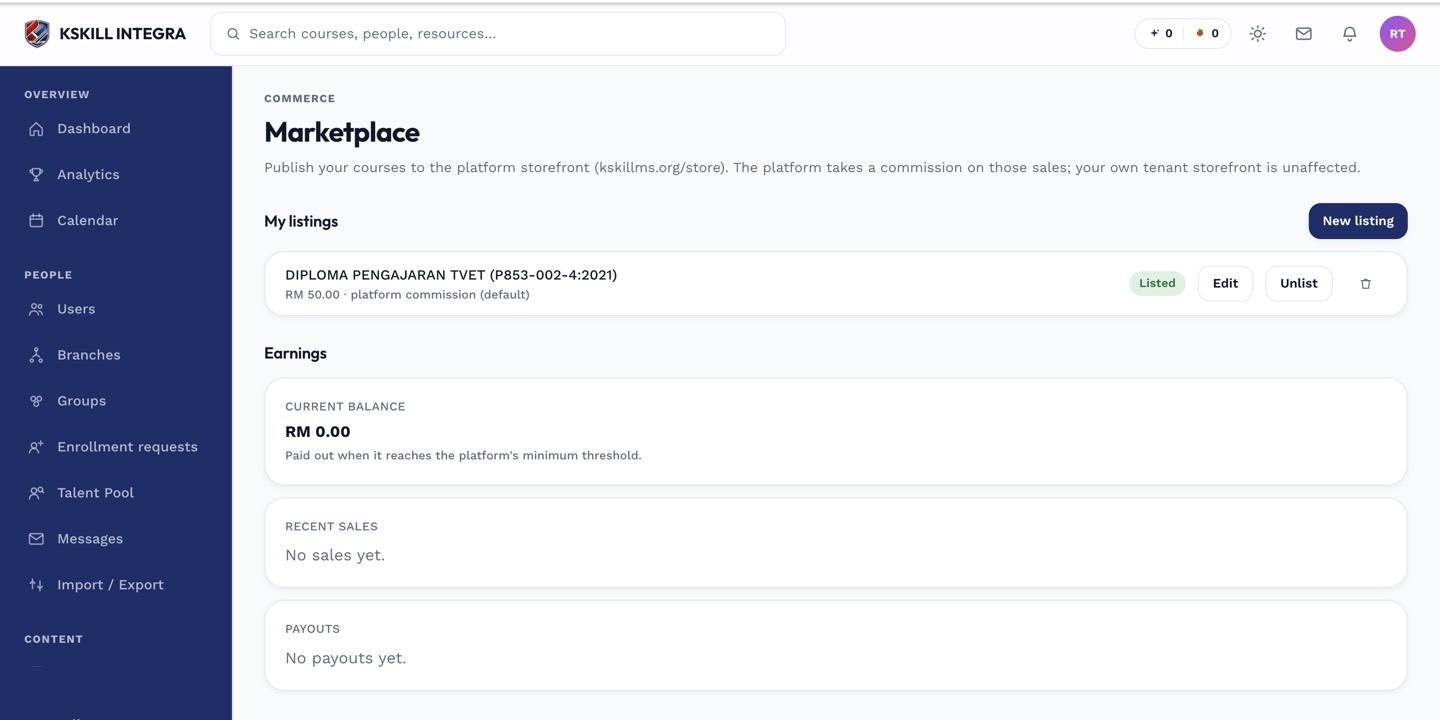
The marketplace is the shared shelf every seller tenant lists into.
Notes
- Fork fields still exist in the schema but are deprecated — do not build against them.
- For buyers who need full ownership, buy the course outright outside the marketplace flow.